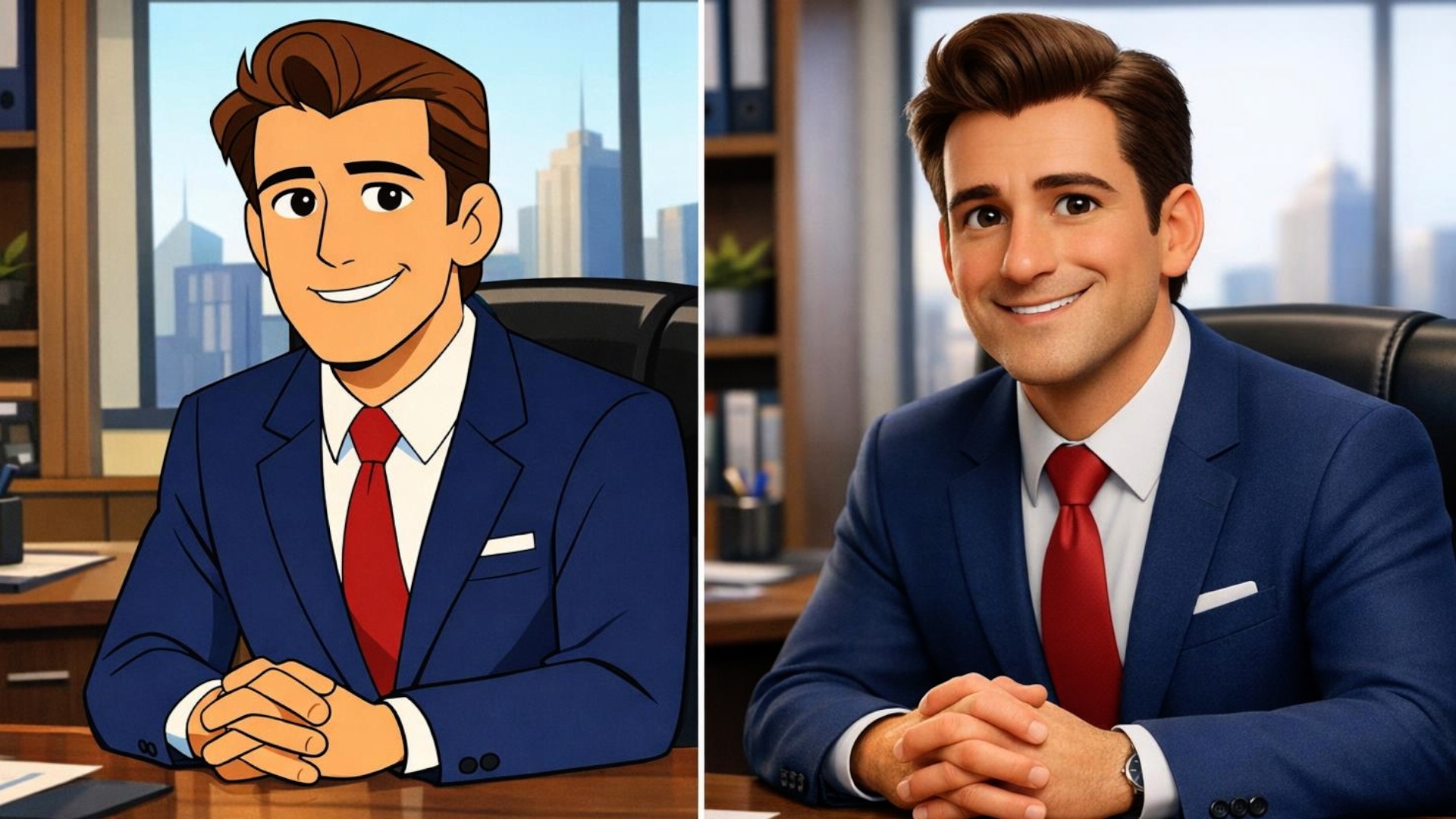
When it comes to video production in Toronto, animated video is no longer a marketing luxury item… it’s a core communication tool in the corporate video toolbox. Organizations rely on video to explain what they do, how they do it and why it matters. As companies invest more strategically in professional video production, one question consistently arises during planning meetings:
Should we use 2D or 3D animation for our corporate video?
At Groovy Concepts, we help organizations across Toronto, Oakville, Windsor, and throughout Canada answer that question every day. As a corporate video and animation production company, our role is not to push a particular style, but to recommend the approach that best supports business goals, audience expectations, and long-term value.
This article provides a practical, business-focused comparison of 2D vs 3D animation for corporate videos, helping marketing leaders, communications teams and executives make informed decisions based on strategy… not trends.
Why Animation Plays a Critical Role in Corporate Video
Animation has become a cornerstone of modern corporate video production because it solves problems that live-action video often cannot.
Organizations turn to animation when they need to:
- Explain complex, technical, or abstract ideas
- Visualize processes, systems, or workflows
- Communicate consistently across multiple departments or regions
- Avoid logistical, safety, or operational constraints
- Create content that remains relevant over time
At Groovy Concepts, we frequently work with clients who initially assume their project must be live-action, only to discover that animation provides a clearer, more flexible and more cost-effective solution. This is especially true for organizations operating in manufacturing, technology, professional services and regulated industries across Ontario and Canada.
Understanding the difference between 2D and 3D animation is the first step in choosing the right approach.
What Is 2D Animation in Corporate Video?
2D animation exists in a two-dimensional space (height and width, without depth). In corporate video production, this includes illustrated characters, icons, typography, infographics, diagrams and motion graphics.
2D animation is widely used for:
- Corporate overview videos
- Explainer and marketing videos
- Internal communications
- Training and onboarding content
- Executive and leadership messaging
Key Characteristics of 2D Animation:
- Clean, flat visual design
- Strong emphasis on scripting and storytelling
- Easy alignment with brand guidelines
- Efficient production timelines
- Cost-effective scalability
For many organizations, 2D animation is often the first—and best—choice. At Groovy Concepts, we regularly recommend 2D animation for clients who need to communicate clearly, professionally, and consistently across multiple touchpoints.
What Is 3D Animation in Corporate Video?
3D animation introduces depth, perspective, and realism. Objects exist in a three-dimensional environment and can be viewed from multiple angles, often with realistic lighting, textures and motion.
In corporate video production, 3D animation is commonly used for:
- Product demonstrations
- Manufacturing and industrial visualizations
- Equipment and machinery walkthroughs
- Medical, scientific and technical explanations
- Advanced operational or safety training
Key Characteristics of 3D Animation:
- High level of realism
- Accurate representation of physical objects
- Strong visual impact
- Greater technical complexity
- Longer production timelines
Groovy Concepts produces 3D animation when accuracy and realism are critical—particularly for organizations that need to show how a product, system, or process actually works.
2D vs 3D Animation: A Comparison
1. Communication Clarity
2D Animation
2D animation excels at simplifying information. By removing unnecessary visual detail, it helps viewers focus on the message rather than the medium. This makes it ideal for high-level concepts, workflows and strategic messaging.
3D Animation
3D animation shines when viewers need to understand physical form, spatial relationships, or mechanical function. It allows audiences to see inside products, equipment, or environments in ways live-action video often cannot.
Groovy Concepts Insight: If your message is conceptual, 2D is usually the stronger choice. If it is physical or technical, 3D may be necessary.
2. Brand Alignment and Visual Consistency
2D Animation
2D animation integrates seamlessly with corporate branding. Colours, typography, and visual language can be precisely matched to existing brand standards, ensuring consistency across all video assets.
3D Animation
While visually impressive, 3D animation requires additional care to ensure brand alignment. Lighting, textures, and realism must be intentionally designed to avoid visuals that feel disconnected from the brand.
For organizations producing ongoing video content, Groovy Concepts often recommends 2D animation as the most reliable way to maintain long-term brand consistency.
3. Production Timeline and Flexibility
2D Animation
2D animation offers greater flexibility during production. Scripts, visuals and pacing can be adjusted more easily, making it well suited for projects with evolving messaging or tight timelines.
3D Animation
3D animation involves modelling, texturing, lighting, animation and rendering. Changes later in the process can significantly impact timelines and budgets.
When speed and adaptability are priorities, 2D animation is often the more practical choice.
4. Budget Considerations
Budget plays a major role in animation decisions.
2D Animation
- Lower production costs
- Predictable budgeting
- Ideal for series-based content
3D Animation
- Higher upfront investment
- Increased labour and technical requirements
- Costs scale with complexity
At Groovy Concepts, we help clients assess where their budget will deliver the most impact, often recommending a focused 3D sequence within a primarily 2D video when realism is only required for part of the story.
5. Audience Expectations
Different audiences have different needs:
- Executives value clarity and efficiency
- Employees want straightforward, easy-to-digest information
- Technical buyers need accurate, detailed visuals
Understanding who the video is for and what they need to understand should always guide the animation style decision.
When 2D Animation Is the Right Choice
2D animation is often the best solution when:
- Explaining services, processes, or strategies
- Communicating internally across teams or locations
- Supporting marketing and sales initiatives
- Maintaining strict brand guidelines
- Creating content that will be updated or reused
Groovy Concepts frequently produces 2D animated corporate videos for organizations looking to communicate clearly and consistently without unnecessary production complexity.
When 3D Animation Is the Right Choice
3D animation is most effective when:
- Products or machinery must be shown accurately
- Manufacturing or engineering processes are central
- Safety or technical training requires realism
- Real-world filming is impractical or unsafe
For manufacturing and industrial companies across Ontario, 3D animation can provide clarity while minimizing disruption to operations.
Combining 2D and 3D Animation
Many corporate videos benefit from a hybrid approach.
For example:
- 2D animation introduces concepts and context
- 3D animation demonstrates physical functionality
- Motion graphics reinforce key data or messaging
At Groovy Concepts, this blended strategy is often the most effective way to balance clarity, impact and budget.
Choosing the Right Animation Partner
Selecting the right animation style is only part of the equation. Choosing the right production partner is just as important.
When working with a corporate animation and video production company, look for a team that:
- Starts with strategy, not visuals
- Understands your industry and audience
- Can recommend 2D, 3D, or hybrid solutions objectively
- Has experience delivering corporate-focused animation
Groovy Concepts approaches every project with this mindset, ensuring your animated video serves the message, not the other way around.
There is no universal answer to the question of 2D vs 3D animation for corporate videos. Both are powerful tools when applied strategically.
For most corporate communications, marketing and training initiatives, 2D animation offers clarity, efficiency and strong brand alignment. For product-focused, technical, or industrial storytelling, 3D animation delivers realism and insight that cannot be achieved through other means.
At Groovy Concepts, we specialize in corporate animation and video production in Toronto that supports real business objectives. By aligning animation style with message, audience and long-term goals, we help organizations across Toronto, Oakville, Windsor, and throughout Canada turn complex ideas into clear, compelling visual stories.
Learn more here: https://www.groovyconcepts.ca/animation/