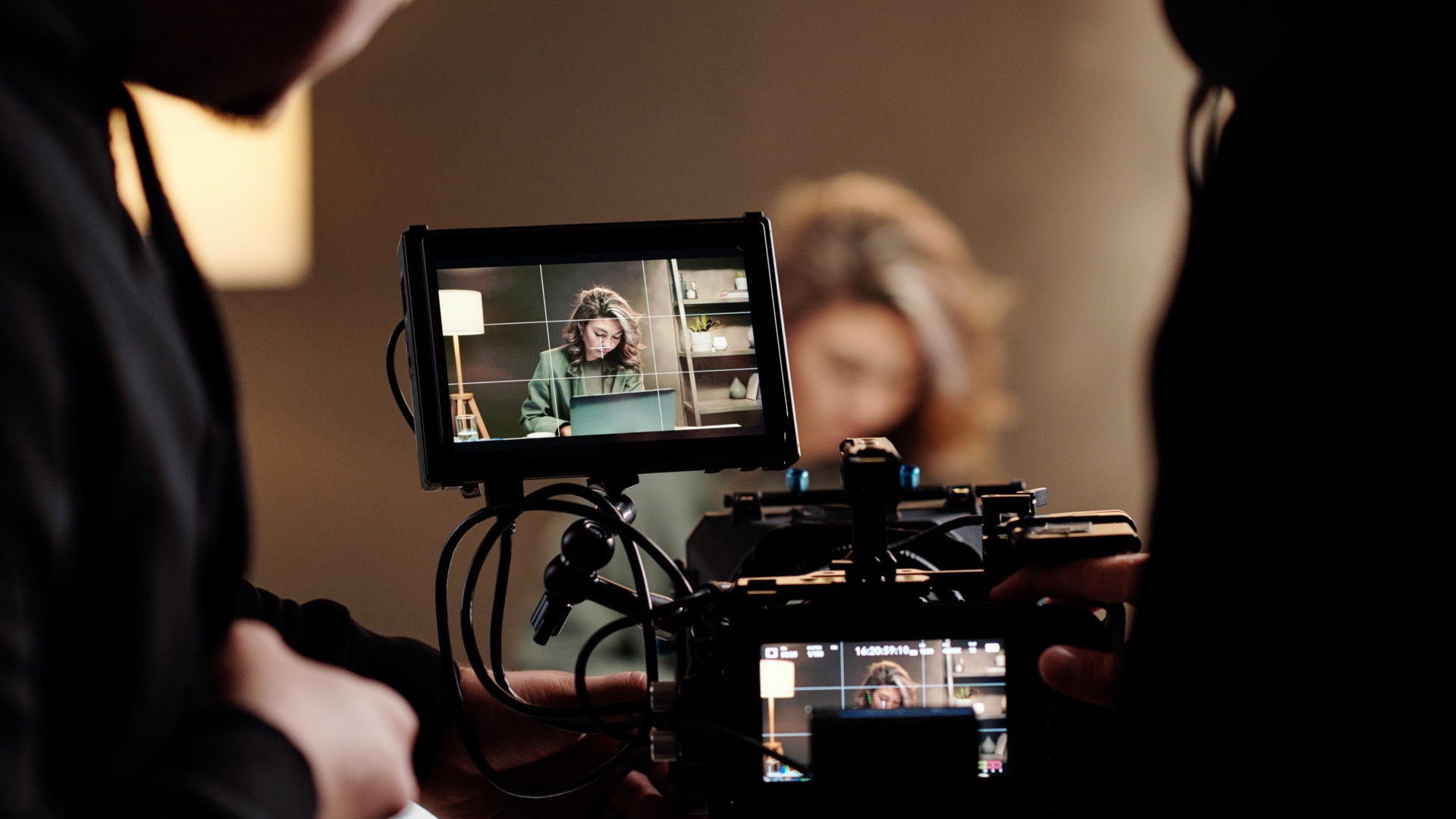
Interview video has become one of the most powerful tools for building trust, communicating expertise, and telling authentic brand stories. Whether it’s a client testimonial, executive message, or employee spotlight, audiences consistently gravitate toward real people sharing real experiences.
But here’s the reality: not all interview videos are created equal.
In highly competitive markets like Toronto, where businesses are constantly investing in video production to stand out, poorly executed interview content can do more harm than good. Instead of elevating your brand, it can quietly signal inexperience, lack of polish, or worse… lack of credibility.
Across Toronto and throughout Ontario, companies are increasingly recognizing that interview video is not just about pointing a camera at someone and pressing record. It’s about crafting a controlled, intentional experience that brings out authenticity while maintaining a cinematic, professional standard.
At Groovy Concepts, we’ve spent over two decades refining that balance, combining high-end video production techniques with the art of interviewing to produce content that feels natural, engaging and on-brand.
Below are the 10 most common interview video mistakes that make brands look amateur and more importantly… how to avoid them.
Poor Lighting That Flattens or Distracts
Lighting is one of the fastest ways to separate amateur from professional video production.
Common mistakes include:
- Harsh overhead office lighting
- Uneven shadows across the face
- Backgrounds that are brighter than the subject
- No separation between subject and background
When lighting is poorly executed, your subject can look tired, unflattering, or disconnected from their backdrop. It immediately lowers perceived production value.
How to fix it:
A professional interview setup uses a controlled lighting environment:
- Key light for shaping the face
- Fill light to soften shadows
- Backlight (or hair light) to create separation
- Background lighting for depth
The goal isn’t just visibility; it’s dimension, mood and focus.
Bad Audio (The Fastest Way to Lose Trust)
You can get away with slightly imperfect visuals. You cannot get away with bad audio.
Common audio issues:
- Echoey rooms
- HVAC noise
- Low-quality built-in camera microphones
- Inconsistent volume levels
In a professional interview video, audio is often more important than the image itself. Poor sound makes viewers subconsciously disengage.
How to fix it:
- Use lavalier or boom microphones (ideally both as backup)
- Record in acoustically controlled environments
- Monitor audio levels in real time
- Clean up sound in post-production
High-quality audio signals professionalism and respect for your audience.
Stiff, Over-Scripted Answers
One of the biggest mistakes in interview video production is over-preparing the subject.
You’ve likely seen it:
- Robotic delivery
- Corporate jargon
- Memorized responses that feel unnatural
Trying to control the message too tightly often results in content that feels less authentic and therefore less persuasive.
How to fix it:
Great interview videos rely on guided conversations, not scripts.
At Groovy Concepts, our approach is rooted in experienced interviewing—drawing out genuine responses through:
- Open-ended questions
- Strategic follow-ups
- Creating a relaxed, conversational environment
After 20+ years of interviewing, we’ve learned that authenticity can’t be scripted but it can absolutely be directed.
Weak or Distracting Backgrounds
The background of your interview isn’t just “behind” the subject, it’s part of the story.
Common issues include:
- Cluttered office spaces
- Plain, lifeless walls
- Distracting movement in the background
- Lack of visual depth
These elements can pull attention away from your subject and dilute your message.
How to fix it:
- Choose environments that reinforce your brand
- Create depth using distance and proper lens choice
- Add practical elements (lights, textures, branding)
- Control what’s in frame
A strong background subtly enhances credibility without competing for attention.
No Depth of Field
One hallmark of amateur video production is everything being in sharp focus (from the interviewee to the back wall).
This creates a flat, “home video” or low-end corporate aesthetic.
How to fix it:
Use shallow depth of field:
- Fast lenses (e.g., f/1.8–f/2.8)
- Proper subject-to-background distance
- Use a “standard” lens (typically these are between 35mm to 60mm).
This can create separation, draw attention to the subject, and deliver that cinematic look audiences expect.
Poor Framing and Composition
Framing might seem simple but it’s often overlooked.
Common mistakes:
- Too much headroom
- Subject placed dead-center without intention
- Awkward cropping
- Inconsistent framing between shots
These small details can make a video feel unpolished.
How to fix it:
- Use rule of thirds for natural composition
- Maintain consistent eye-line positioning
- Frame for the platform (landscape vs vertical)
- Consider multi-camera setups for flexibility
Professional framing adds subtle authority to your content.
Lack of Direction During the Interview
Many amateur interview shoots fail before they even reach the editing stage because there’s no clear direction during filming.
This leads to:
- Rambling answers
- Missed key messaging
- Inconsistent tone
How to fix it:
An experienced interviewer is critical.
This is one of the biggest differentiators in high-quality interview video production. It’s not just about technical skill, it’s about knowing:
- When to dig deeper
- How to rephrase questions
- How to guide the subject toward clarity
At Groovy Concepts, interviewing is treated as a craft. It’s what transforms raw footage into compelling storytelling.
No Story Structure in the Final Edit
Even if the interview is great, poor editing can ruin it.
Common issues:
- No clear beginning, middle and end
- Repetitive or unfocused messaging
- Lack of emotional progression
An interview video is not just a transcript, it’s a story.
How to fix it:
Structure your edit around a narrative:
- The challenge or context
- The solution or experience
- The outcome or impact
Layer in:
- B-roll
- Music
- Graphics
This transforms talking points into a compelling, watchable story.
Ignoring B-Roll (Or Using It Poorly)
B-roll is what brings interview videos to life but it’s often underutilized.
Mistakes include:
- No supporting visuals at all
- Random, irrelevant footage
- Overuse that distracts from the speaker
How to fix it:
- Capture intentional, story-driven B-roll
- Use it to reinforce what’s being said
- Maintain pacing and visual interest
Strong B-roll elevates the production from “talking head” to cinematic storytelling.
Treating Interview Video as a One-Off Instead of a Strategy
This is perhaps the most costly mistake.
Many companies invest in a single interview video without thinking about long-term use.
The result?
- Limited ROI
- Missed content opportunities
- Inconsistent messaging
How to fix it:
Think of interview video as a content engine.
From one shoot day, you can create:
- Full-length videos
- Social media clips
- Website content
- Recruitment assets
- Internal communications
This is where strategic video production becomes a true business asset.
Why Professional Interview Video Production Matters
In competitive markets like Toronto and across Ontario, audiences are becoming more discerning. They can immediately tell the difference between:
- A quick, DIY setup
- A thoughtfully produced, professionally directed interview
And that difference directly impacts how your brand is perceived.
A polished interview video communicates:
- Credibility
- Attention to detail
- Confidence in your message
An amateur one suggests the opposite… even if your product or service is exceptional.
The Groovy Approach
At Groovy Concepts, we’ve built our reputation on delivering high-value interview video production that blends technical excellence with human storytelling.
What sets us apart:
High-End Production Value – We bring cinematic lighting, professional audio, and intentional composition to every shoot—ensuring your brand looks as strong as it truly is.
20+ Years of Interviewing Experience – Anyone can ask questions. Very few know how to guide a conversation that uncovers meaningful, authentic insights. That’s where experience matters most.
Strategic Thinking – We don’t just create videos, we help you maximize them:
- Multi-use content strategies
- Platform-specific edits
- Long-term content planning
Deep Understanding of the Market – Working extensively across Ontario, we understand the nuances of corporate communication in industries like manufacturing, professional services and B2B organizations.
Interview videos are one of the most powerful tools in modern video production but only when executed properly.
Avoiding these common mistakes can mean the difference between content that gets ignored… and content that builds trust, drives engagement and converts.
In a crowded marketplace like Toronto and beyond, quality isn’t optional, it’s expected.
If your goal is to create interview videos that feel authentic, look cinematic, and deliver real business value, it’s worth investing in a professional approach from the start.
Because at the end of the day, your brand deserves more than just a camera… it deserves a story told the right way.